Home / Gold Coast Mansions / Open to the public
Clayton
Bryce House, Bryce/Frick Estate, Nassau County Museum of Art, Arnold and Joan Saltzman Fine Arts Building, Cedarmere-Clayton Estates
Open to the public Roslyn Harbor, Nassau County Built 1900 for Lloyd Stephens Bryce (builder); Childs and Frances Dixon Frick (from 1919)
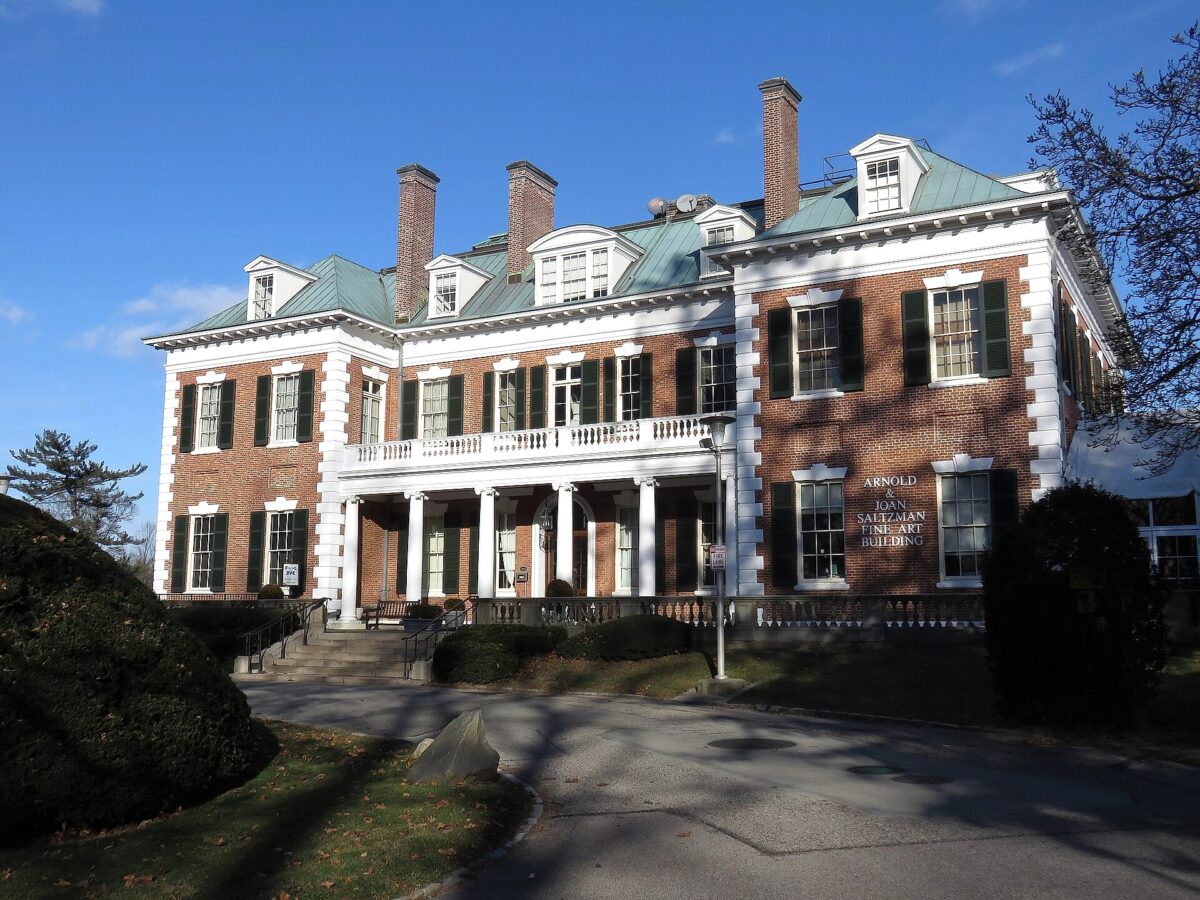
Most of the land at Clayton was once part of the Upland Farm of the poet and editor William Cullen Bryant, whose own house, Cedarmere, stands across Bryant Avenue. The National Register nomination says that in 1899 an undeveloped part of the Bryant property was sold to Lloyd Stephens Bryce; the museum gives 1900. Bryce, born in 1851, studied at Oxford and took a law degree at Columbia. In 1879 he married Edith Cooper, a granddaughter of Peter Cooper, and from 1887 he controlled and edited the North American Review, which published the young Edith Wharton.
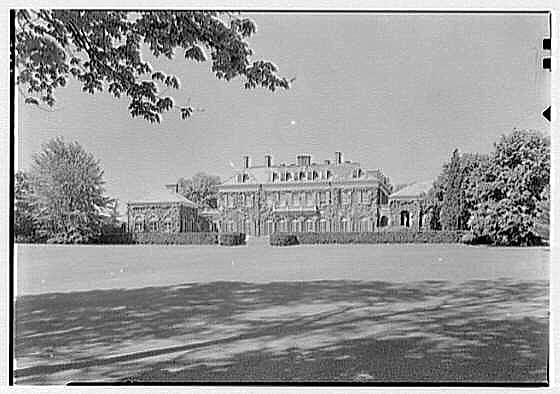
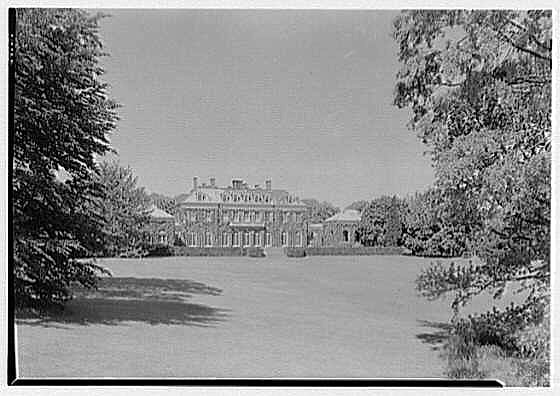
Bryce hired Ogden Codman Jr., best known for interiors, to design a large house. Codman produced a Georgian Revival mansion with a main block and flanking wings, hip roofs, classical cornices, and symmetrically placed chimneys; the nomination refers to it as Codman's 1901 design. The Bryces planted flower, fruit, and vegetable gardens and built a shingled water tower with a castellated top. The family kept the estate until 1918.
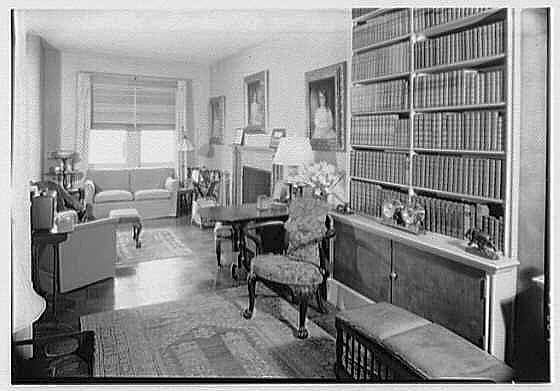
In 1919 the industrialist Henry Clay Frick bought the property. The museum says it was a gift for his son Childs Frick and daughter-in-law Frances; the nomination says it was bought for Frances Dixon Frick. The couple named it Clayton. Sir Charles Carrick Allom remodeled the house in 1919, removing the original entrance, adding a five-bay loggia, combining Codman's vestibule, foyer, and stair into one large hall, and installing imported European paneling, which gave the interiors the look of an English country house. Guy Lowell designed a brick gatehouse, and Henry Milliken designed a garden trellis. Childs Frick planted a pinetum and kept a small zoo. Frances Frick hired the landscape architect Marian Cruger Coffin to redesign the gardens, in 1926 according to the nomination and 1925 according to the museum. Coffin laid out geometric gardens with brick walls, steps, a circular pool, and an allee to the house. Frances Frick died in 1953, and Childs Frick lived at Clayton until his death in 1965 at 81.
Nassau County bought the estate in 1969 and opened a county art museum there. In 1989 the museum became a private not-for-profit institution governed by its own board. The main house is now called the Arnold and Joan Saltzman Fine Arts Building, and Coffin's gardens have been restored. The estate was listed on the National Register of Historic Places in 1986 together with Cedarmere as the Cedarmere-Clayton Estates; that nomination counted 165 acres at Clayton, while the museum and county now give 145. Visitors can tour the galleries Tuesday through Sunday and walk the arboretum and sculpture garden every day.
Photographs
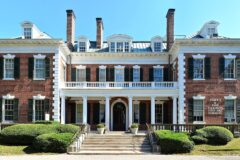
Nassau County Museum of Art, pano of main building 01 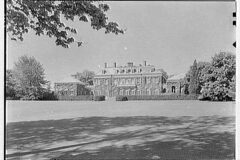
Childs Frick, residence in Roslyn, Long Island (Gottscho-Schleisner Collection, Library of Congress) 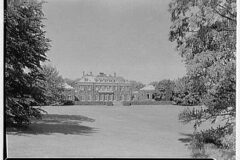
Childs Frick, residence in Roslyn, Long Island (Gottscho-Schleisner Collection, Library of Congress) 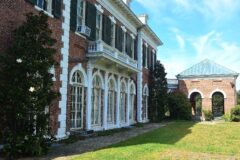
Nassau County Museum of Art, rear of main building 01 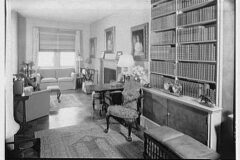
Childs Frick, residence in Roslyn, Long Island, New York (Gottscho-Schleisner Collection, Library of Congress)


Sources
- National Park Service, via National Archives Catalog: National Register nomination: Cedarmere-Clayton Estates, 1986
- National Archives: Cedarmere-Clayton Estates nomination form (PDF)
- Nassau County Museum of Art: History
- Nassau County Museum of Art: Home page
- Nassau County: Nassau County Museum of Art
- Nassau County: Cities, Towns and Villages
- Wikidata: Nassau County Museum of Art (Q6967563)
Last updated October 18, 2026. Something wrong or missing? Tell us.