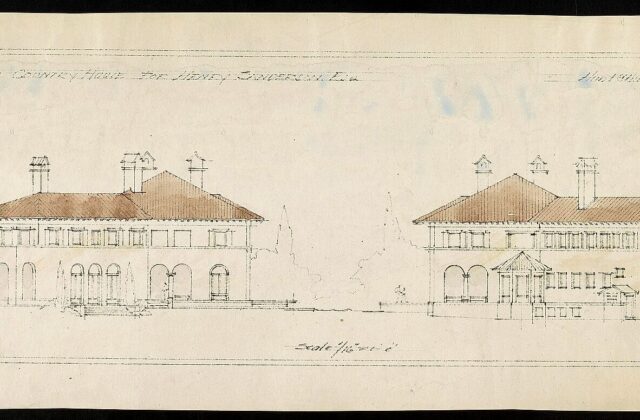
Home / Gold Coast Mansions / Open to the public
Coe Hall
Main House at Planting Fields, William Robertson Coe estate, Planting Fields Arboretum State Historic Park
Open to the public Upper Brookville, Nassau County Built 1919 to 1920 for William Robertson Coe and Mai Rogers Coe

Before the Coes, the land belonged to the lawyer James Byrne, who bought about 350 acres in 1904. The Cultural Landscape Foundation says Grosvenor Atterbury designed the first house there, finished by 1908, and that James Leal Greenleaf laid out its grounds. William Robertson Coe bought the property in 1913. Coe was born in Worcestershire, England, in 1869, came to the United States at 14, and rose through the insurance brokerage Johnson and Higgins; he was also a director of the Virginian Railway. In 1900 he married Mai Huttleston Rogers, a daughter of the Standard Oil partner Henry H. Rogers.
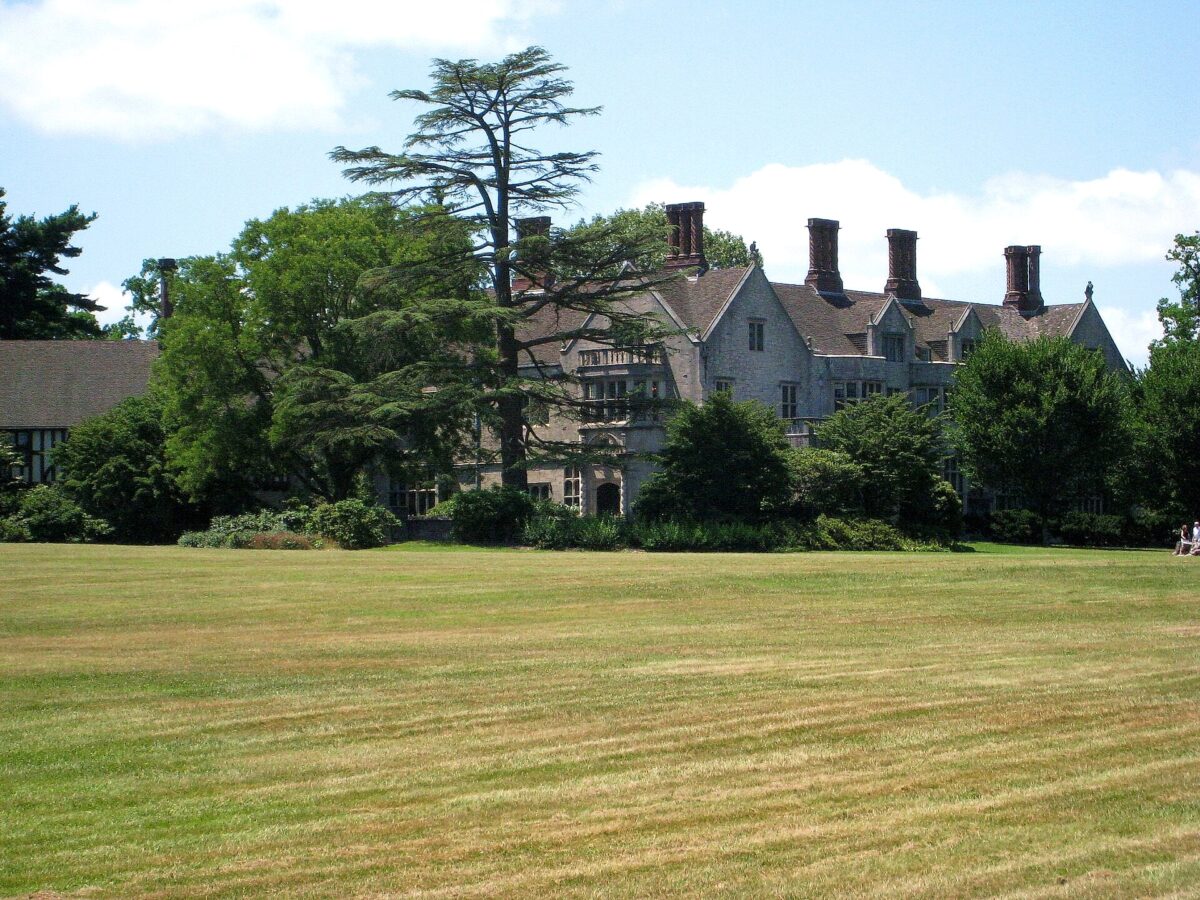
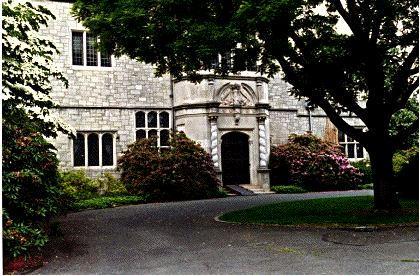
Coe hired the Boston architect Guy Lowell in 1915 to enlarge the greenhouses and design a superintendent's house, and Lowell and A. Robeson Sargent added gardens and a camellia house in 1916. In 1918 the Byrne house burned. Coe then commissioned the New York firm of Walker & Gillette to design a new and larger residence, and the National Register building index dates it to 1919 and 1920. The house is faced in cut stone, with half-timbering, gables, bays, arcades, and leaded casement windows, and the decorators Charles of London oversaw the interiors. Walker & Gillette also designed the stables, garage, gate house, and laundry. In 1918 James Frederick Dawson of the Olmsted Brothers laid out the heather garden and main road, and he continued to shape the grounds into the mid-1930s. On the advice of Charles of London, Coe also bought the Carshalton Gates, eighteenth-century English wrought-iron gates, and set them at the estate's main entrance. Mai Coe died in 1924.
In 1949 Coe deeded Planting Fields to New York State on the condition that it be used for education. State University programs used the grounds, and The Cultural Landscape Foundation says a state college campus operated there from 1955 until about 1970. Coe died in 1955. His New York Times obituary, reprinted in the nomination, described a 410-acre estate and a thirty-seven-room mansion; the Planting Fields Foundation now describes the house as 65 rooms. A fiscal crisis closed Planting Fields in 1971, and it reopened in 1972 with public and private support. The estate was listed on the National Register of Historic Places in 1979.
Today the 409-acre property is Planting Fields Arboretum State Historic Park, overseen by the New York State Office of Parks, Recreation and Historic Preservation together with the Planting Fields Foundation, which runs the Main House, as Coe Hall is now called. The park is open daily, the greenhouses are open six days a week, and the house is shown Friday through Sunday on self-guided and guided tours through November, with holiday tours in December.
Photographs
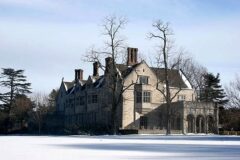
Coe Hall - PFA; January 2006 
CoeHall5579 
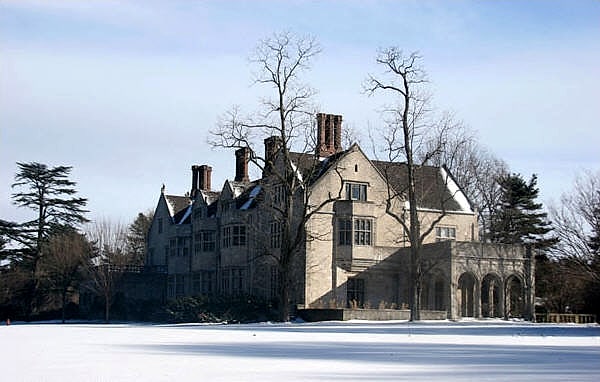
Plantfield5608 (Coe Hall as seen from the other side) 
Coe Hall at Planting Fields 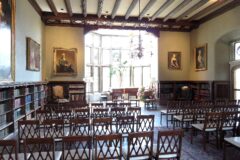
Coe Hall - Great Hall 
Gold Coast Mansion- Coe Hall, Oyster Bay, Long Island, New York.



Sources
- National Park Service, via National Archives Catalog: National Register nomination: Planting Fields Arboretum, 1978 to 1979 (Austin N. O'Brien)
- National Archives: Planting Fields nomination form (PDF)
- The Cultural Landscape Foundation: Planting Fields
- Planting Fields Foundation: Planting Fields Foundation home page
- New York Heritage: Planting Fields Foundation (member profile)
- New York State Office of Parks, Recreation and Historic Preservation: Planting Fields Arboretum State Historic Park
- Nassau County: Cities, Towns and Villages
- Wikipedia: Planting Fields Arboretum State Historic Park
Last updated October 18, 2026. Something wrong or missing? Tell us.