Home / Gold Coast Mansions / Open to the public
Eagle’s Nest
William K. Vanderbilt Estate-Eagles Nest, Vanderbilt Museum, Suffolk County Vanderbilt Museum and Reichert Planetarium
Open to the public Centerport, Suffolk County Built 1910 to 1936 for William Kissam Vanderbilt II
William Kissam Vanderbilt II was born in 1878, the son of William K. Vanderbilt and a great-grandson of Cornelius Vanderbilt. He became president of the New York Central Railroad in 1918. He started the Vanderbilt Cup automobile races in 1904 and began the Long Island Motor Parkway in 1908, which the nomination calls the first high-speed limited-access roadway on Long Island. He was also a yachtsman who brought back marine animals and ethnographic objects from voyages to the Galapagos, the Pacific, Asia, the Mediterranean, Africa, and the Caribbean.
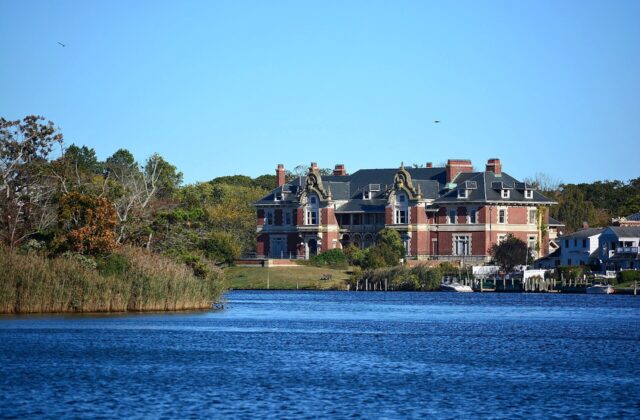
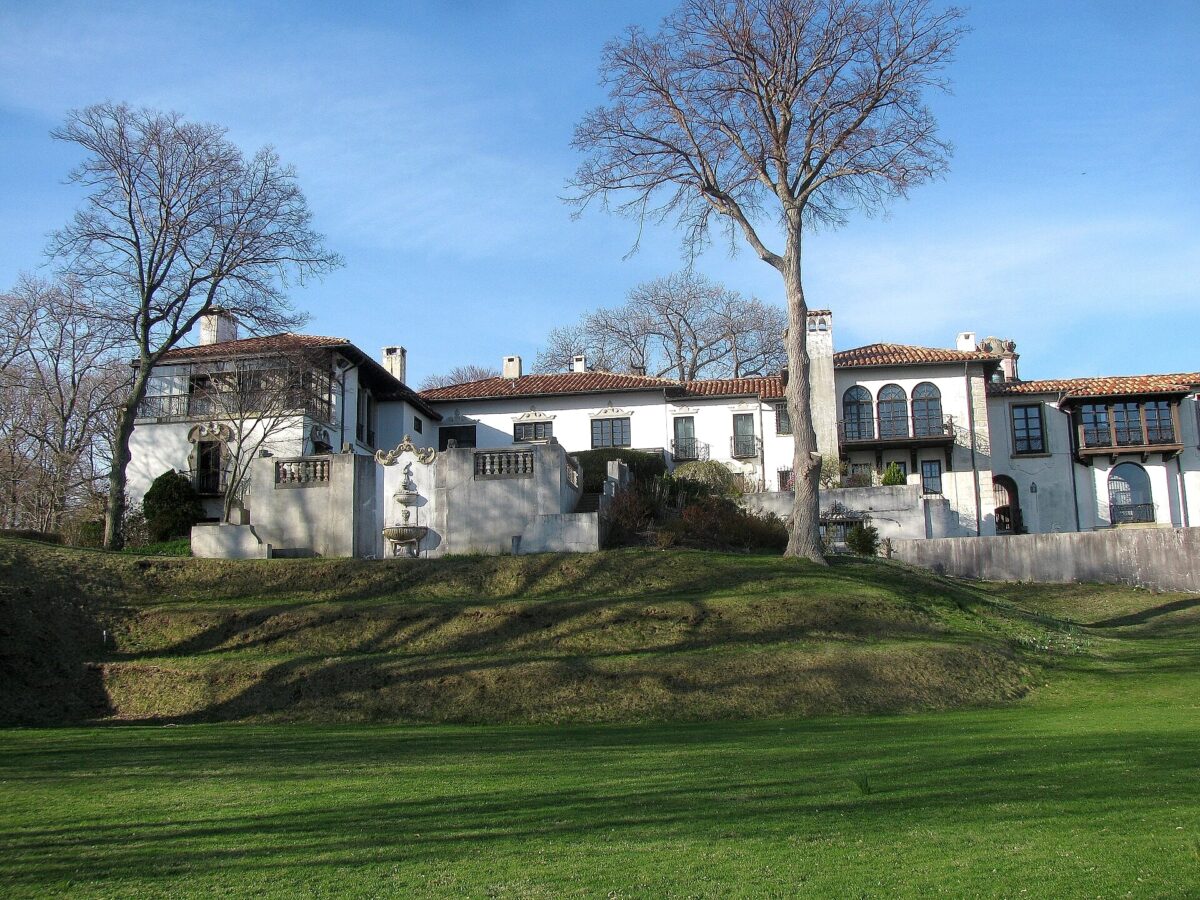
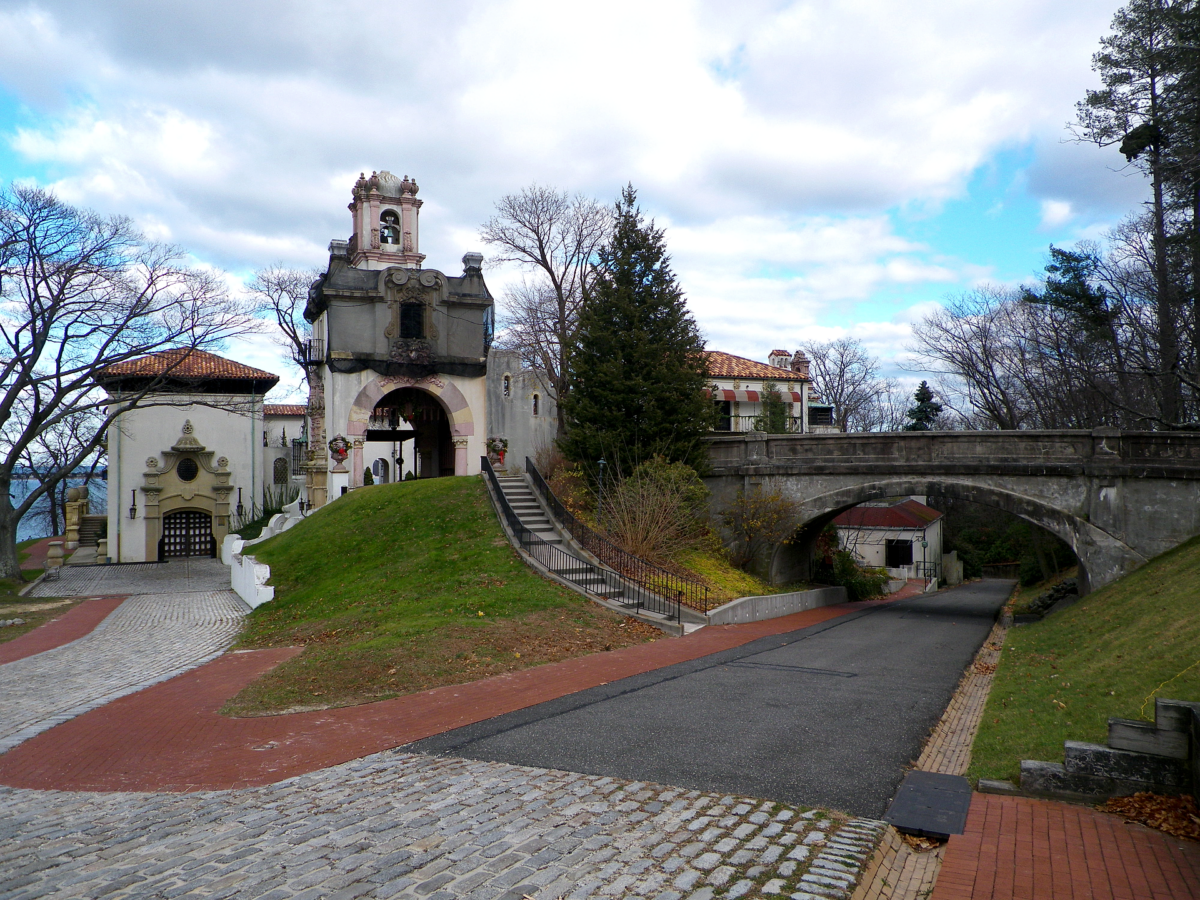
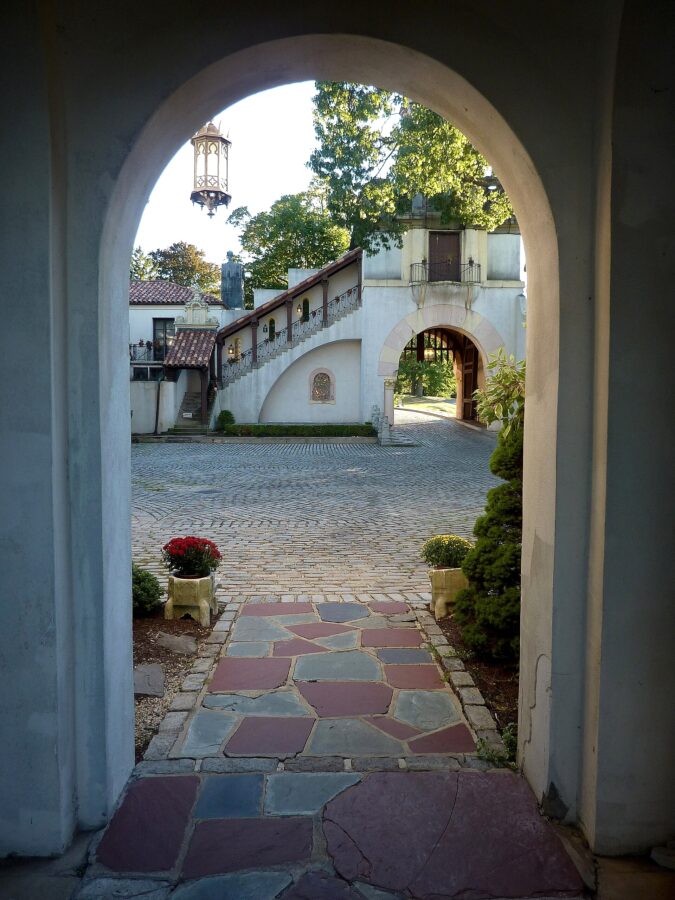
His estate on Little Neck overlooks Northport Harbor. The sources disagree about how it began. The National Register nomination says it was begun in 1907 as a small six-room house in a Japanese style. The museum's own history says the first house, a bachelor's retreat it describes as an English cottage, was begun in 1910, and that the estate grew in stages from 1910 to 1936. The museum traces two main building campaigns: one after his father's death in 1921 left him a large inheritance and his 1927 marriage to Rosamond Warburton, and another after the death of his son, William III, in 1933. Blueprints show the firm of Warren and Wetmore under commission from 1926 to 1930, and the name of Ronald H. Pearce appears on drawings from 1922. The museum says it is reasonable, but not documented, to credit the first house to Warren and Wetmore. By 1928 the house had become a 24-room residence in the Spanish style, with stucco walls, tile roofs, and a central courtyard, and its ironwork is by Samuel Yellin. The Hall of Fishes opened as a marine museum in 1922, and the Memorial Wing followed in 1936.
Vanderbilt died in 1944. He left the estate to Suffolk County together with a fund of $2,000,000 for its upkeep, and the county opened the museum to the public in 1950. A planetarium was built on the site of the old tennis courts; the National Register nomination gives 1971 in one place and 1974 in another. The estate was listed on the National Register of Historic Places in 1985 as part of the Huntington Town Multiple Resource Area.
Today Suffolk County owns the 43-acre estate, which operates as the Suffolk County Vanderbilt Museum and Reichert Planetarium. The living quarters are kept as William and Rosamond Vanderbilt left them and can be seen only on guided tours of more than 15 rooms. Tour tickets are sold at Admissions on the day of the visit, and each tour takes 12 guests. The museum galleries, the Hall of Fishes, and the grounds with views over the harbor are open on the museum's public days.
Photographs
Vanderbilt Museum 
Vanderbilt Museum Courtyard 
Vanderbilt Estate-Eagles Nest Court Yard 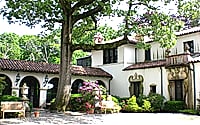
Vanderbilt Summer Home, Eagles Nest - Suffok County New York - Now The Vanderbilt Museum 
WilliamVanderbilt

Sources
- National Park Service, via National Archives Catalog: National Register nomination: Vanderbilt, William K., Estate-Eagles Nest (Huntington Town MRA, 1985)
- National Archives: Eagle's Nest nomination form (PDF)
- Suffolk County Vanderbilt Museum: History
- Suffolk County Vanderbilt Museum: Mansion
- Suffolk County Vanderbilt Museum: Mansion Tours
- Suffolk County Vanderbilt Museum: Home page
- Wikipedia: Vanderbilt Museum
Last updated October 18, 2026. Something wrong or missing? Tell us.