Home / Gold Coast Mansions / Open to the public
Falaise
Harry F. Guggenheim estate, Falaise at Sands Point Preserve
Open to the public Sands Point, Nassau County Built 1923 for Harry F. Guggenheim and Carol Morton Guggenheim
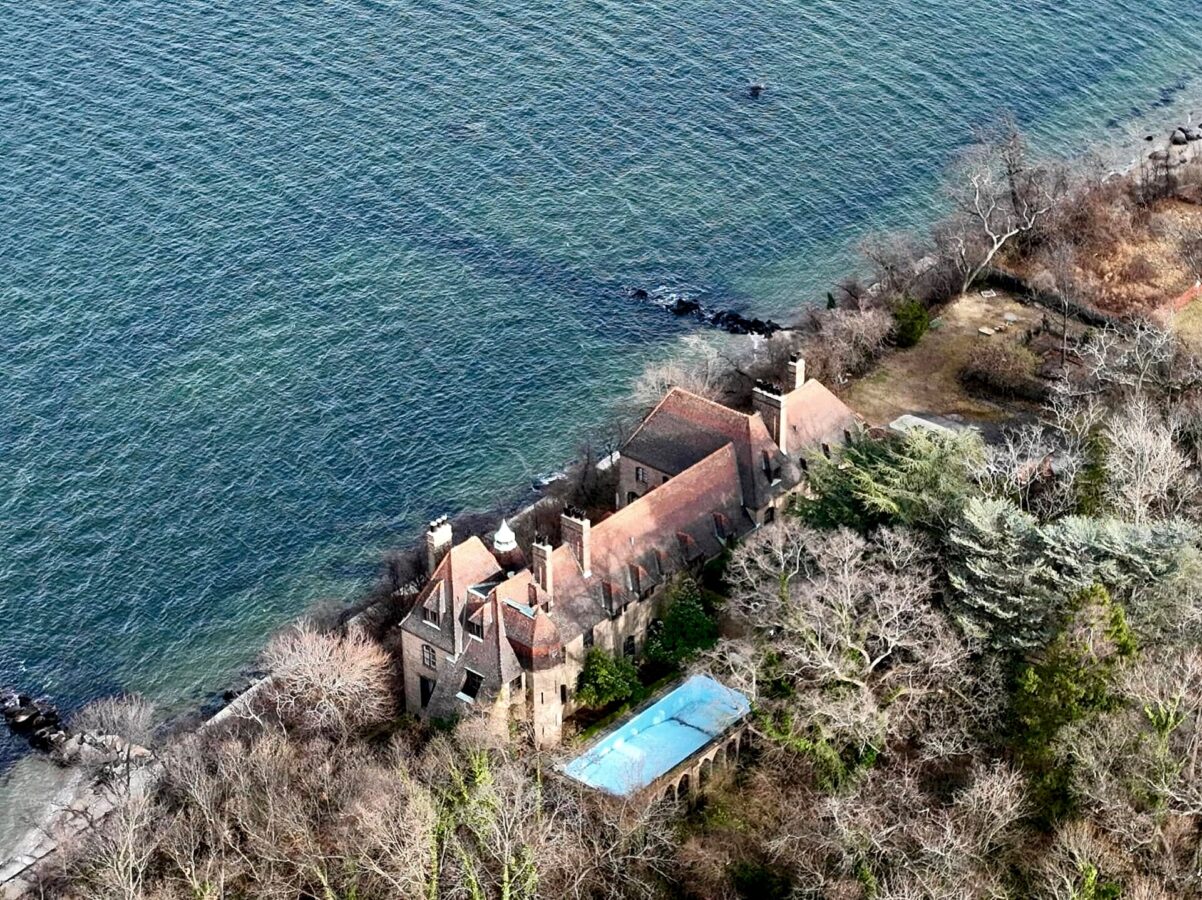
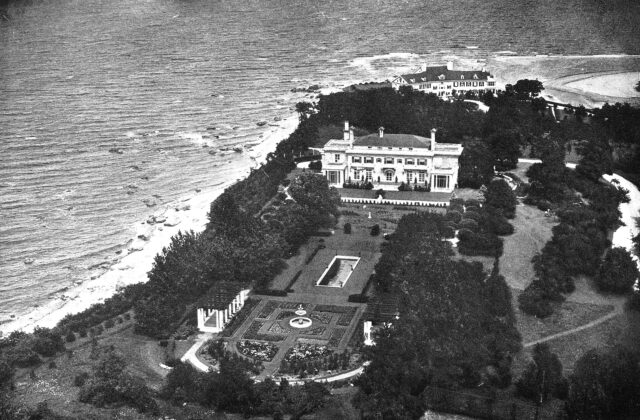
Falaise stands on the Sands Point estate that Howard Gould, a son of Jay Gould, began assembling in 1900. The mining financier Daniel Guggenheim bought the property in 1917 and made Hempstead House his home. In 1923 he gave part of the land to his son Harry F. Guggenheim; the Sands Point Preserve Conservancy says 90 acres, and the National Register nomination adds that Daniel's will in 1930 left Harry 80 acres around his house. The same year, 1923, Harry married his second wife, Carol Morton, the daughter of Paul Morton, a former secretary of the navy.
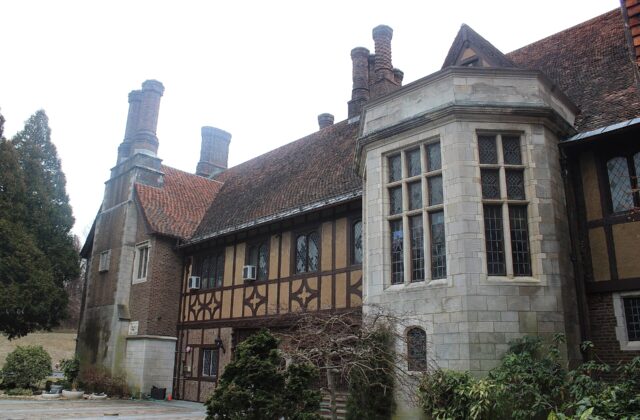
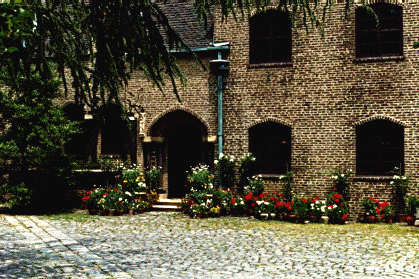
Harry and Carol Guggenheim chose Frederick J. Sterner as architect, working with the young firm of Henry Polhemus and Lewis A. Coffin Jr., who had studied French rural buildings and published a book on small French houses. The house was designed about 1923 to resemble a Norman manor and was set along the edge of a high bluff above the water, held up by sloping brick retaining walls. Its name means cliff in French and also recalls the town of Falaise in Normandy. The house has steep tile roofs, round and many-sided towers, walls of warm tapestry brick, and half-timbering in the service court. On the land side, three walled courtyards hide the south front: an entrance court, a service court, and a pool court that began as a rose garden. A tower in the entrance court served as Carol Guggenheim's art studio. The rooms were designed around antiques and art the couple bought in Europe, and a staff of fourteen ran the house.
Harry Guggenheim, a graduate of Yale and Cambridge, flew as a naval aviator in the First World War. He persuaded his father to fund the first school of aeronautics in the country, at New York University, and the family fund went on to support aviation research across the United States. He backed the rocket work of Robert Goddard and was a close friend of Charles Lindbergh, who often stayed at Falaise. Guggenheim served as ambassador to Cuba. In 1939 he married Alicia Patterson, and in 1940 she published the first edition of Newsday, which he sold to the Times Mirror Foundation in 1970.
Guggenheim died at Falaise on January 22, 1971. His will left his part of the estate, including Falaise, to Nassau County for use as a museum, and that year the county also acquired Hempstead House and Castle Gould from the federal government, reuniting the estate as Sands Point Preserve. Lindbergh attended the dedication of Falaise as a county museum in 1973. The house keeps Guggenheim's furnishings and collections. Since 2008 the Sands Point Preserve Conservancy has managed the 216-acre preserve for the county, and Falaise is shown by guided tour from June through October, with tickets sold on the day of the visit.
Photographs
Gold Coast Mansion, The Faliaise Mansion, Harry Guggenhiem estate, Sands Point, Long Island, New York.
Sources
- National Park Service, via National Archives Catalog: National Register nomination: Gould--Guggenheim Estate, 2006
- National Archives: Gould-Guggenheim Estate nomination form (PDF)
- Sands Point Preserve Conservancy: Falaise
- Sands Point Preserve Conservancy: Mission and History
- Sands Point Preserve Conservancy: Falaise Tours
- Nassau County: Cities, Towns and Villages
Last updated October 18, 2026. Something wrong or missing? Tell us.