Home / Gold Coast Mansions / Standing, institutional
Ormston House
John E. Aldred Estate, St. Josaphat's Monastery, St. Josephat's Monastery, Ormston House
Standing, institutional Lattingtown, Nassau County Built 1916 for John E. Aldred
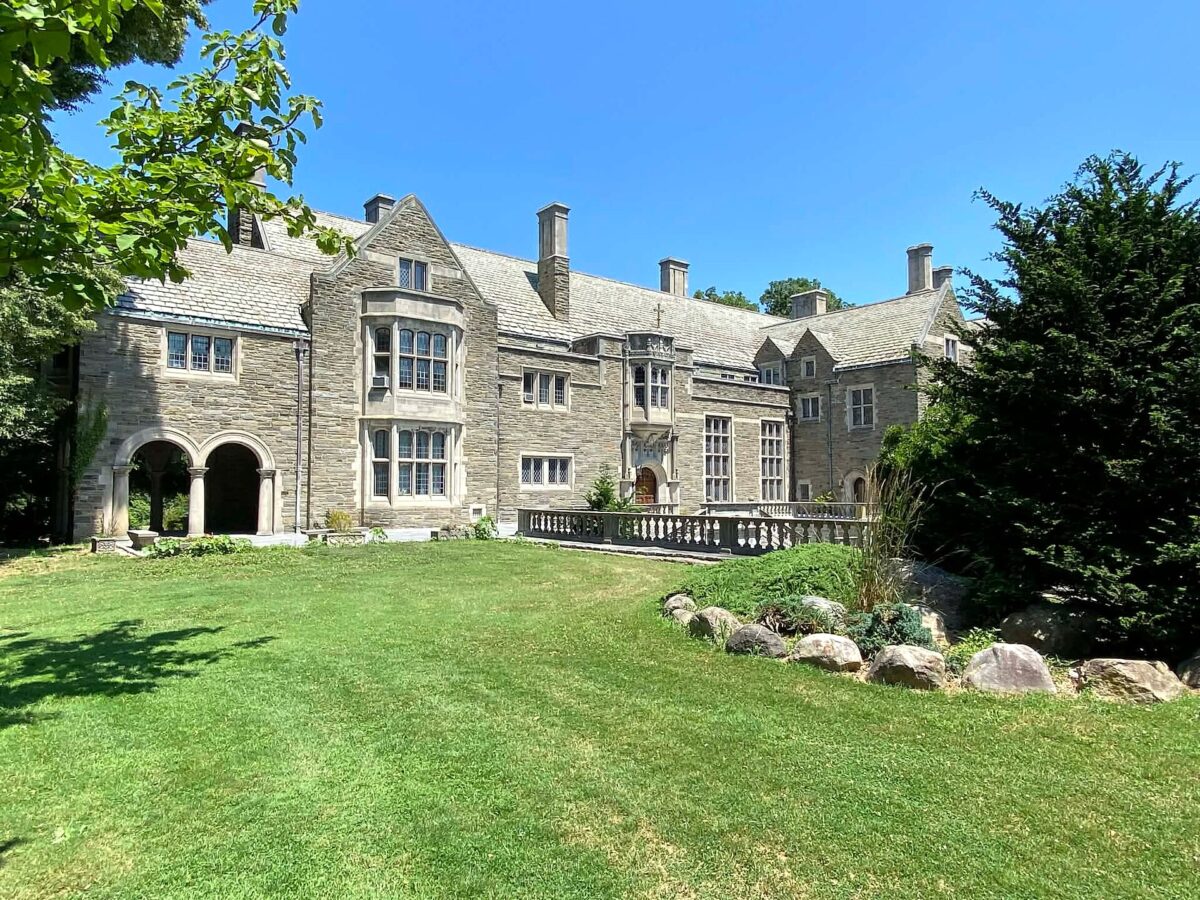
John Edward Aldred was born in Lawrence, Massachusetts, and went to work in the textile mills at fifteen. He became a pioneer of hydroelectric power, building a large power company at Shawinigan Falls in Canada and leading a syndicate that built utilities in northern Italy. By 1931 he was president or an officer of thirty-seven public utility companies. Like other Gold Coast builders, he chose land near friends and business associates, among them Henry P. Davison, George F. Baker and J. P. Morgan. In 1910 Aldred and his neighbor W. D. Guthrie together bought about 400 acres of already developed land at Lattingtown and cleared some sixty houses to open their views of the Sound.
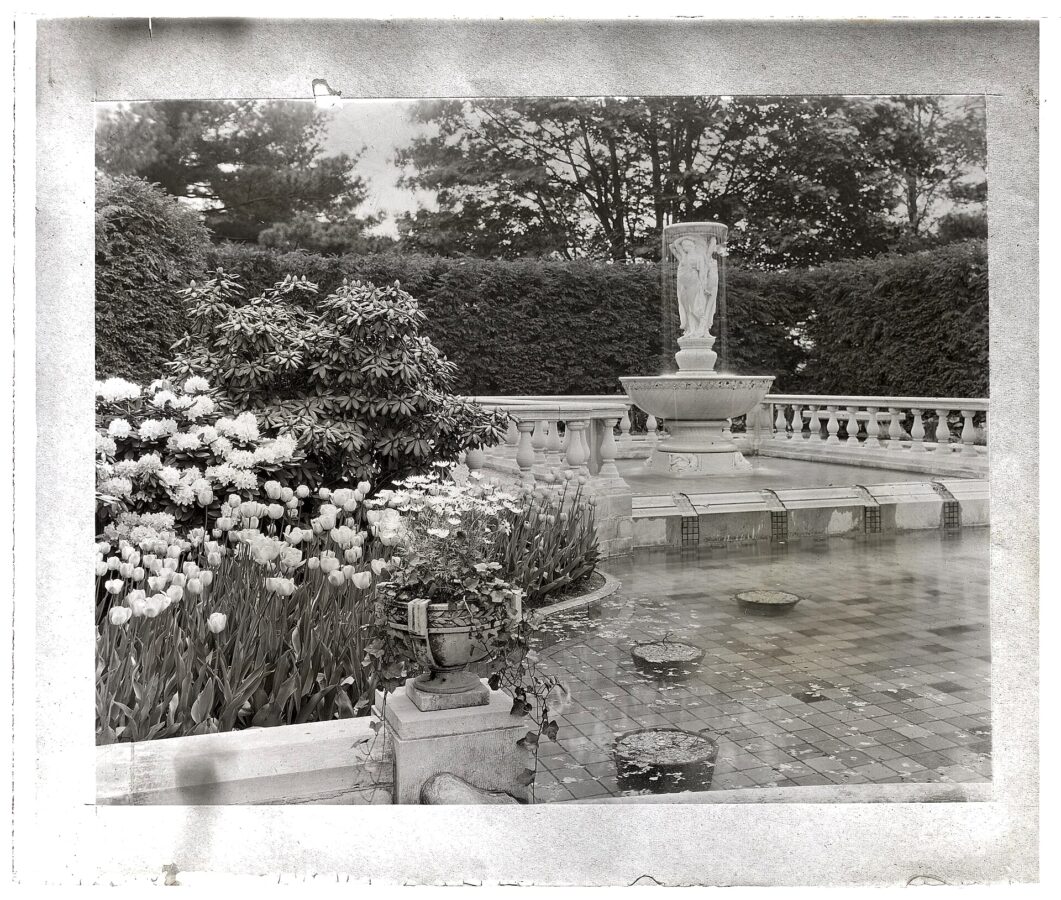
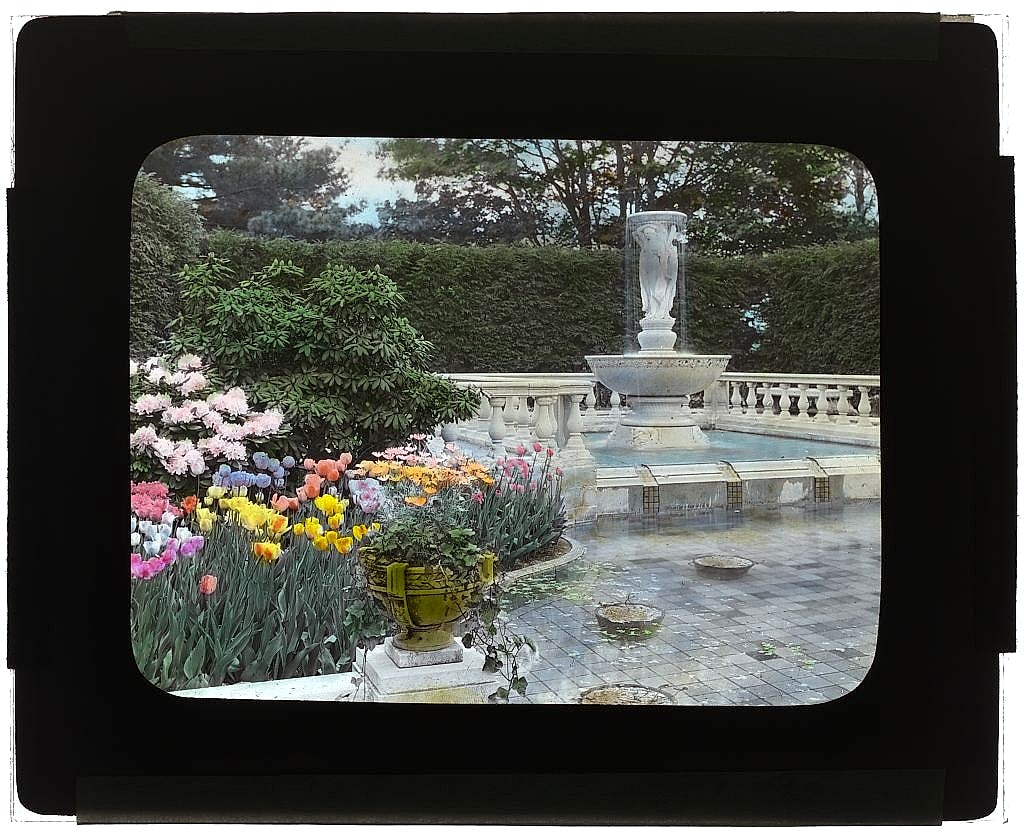
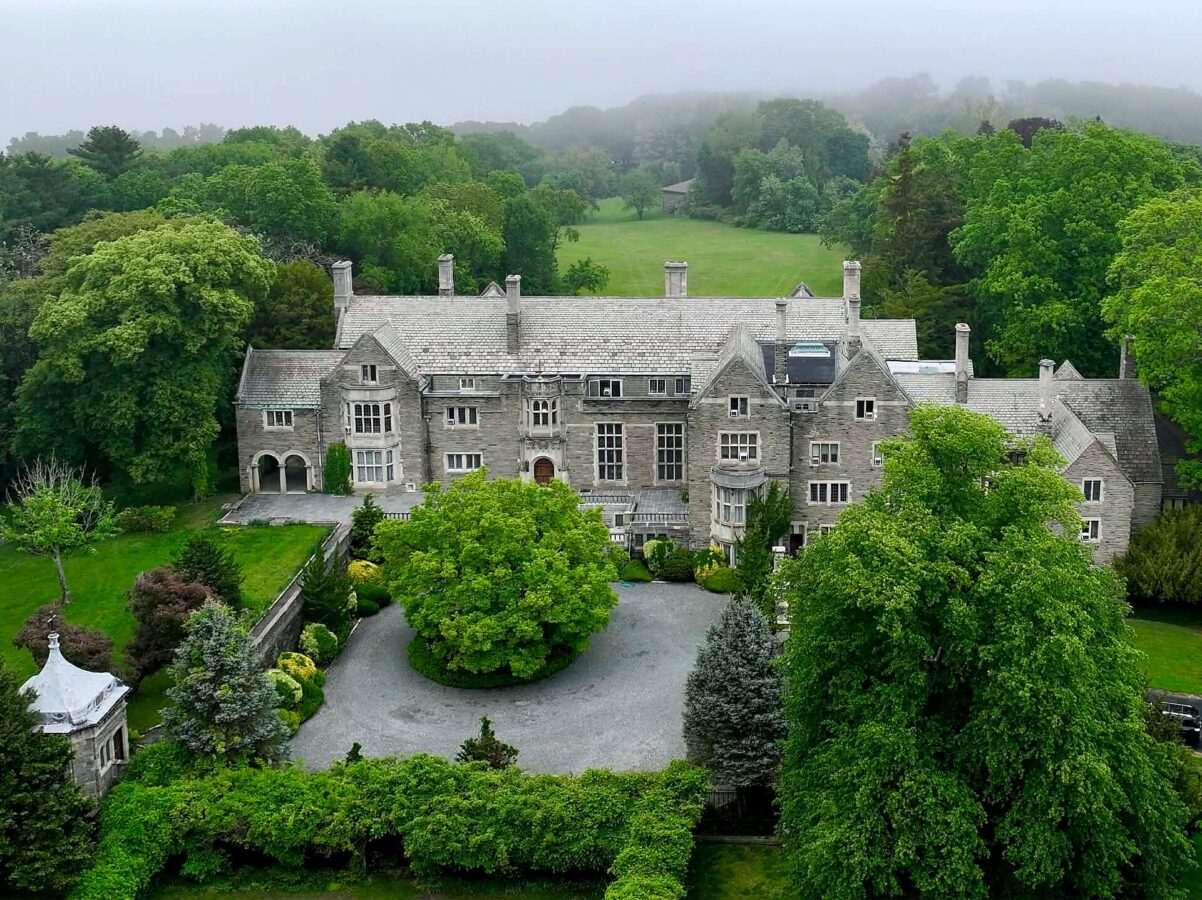
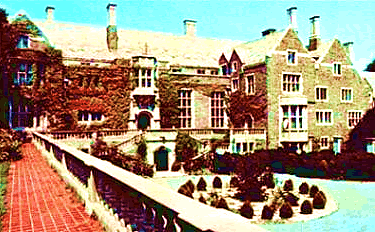
Aldred hired Bertram Grosvenor Goodhue, the Gothic Revival architect who had left the office of Ralph Adams Cram in 1914 to practice on his own. Goodhue designed the house in 1916 in a free Tudor manner, with an asymmetrical plan, random-coursed limestone walls, limestone window surrounds and about a dozen chimney stacks. The house took two years to build, at a reported cost of $3,000,000, while the Aldreds lived in a gardener's cottage on the property. Inside, a Great Hall a story and a half high holds a walnut organ screen and a carved limestone fireplace. The Olmsted Brothers of Brookline, Massachusetts, shaped the grounds, raising the house on a man-made rise and placing formal gardens of seventeenth-century English type in front of it. The house was named Ormston for the maiden name of Mrs. Aldred.
Aldred's fortunes fell in the 1940s. He lost his Italian investments when the Second World War began, and federal utility laws ended his control of his American companies. In 1940 his art collection and the furnishings of Ormston were auctioned at Parke-Bernet. The estate was offered for sale in 1942 and sold in 1944 to the Order of St. Basil the Great, a Ukrainian Catholic order, for $525,000 according to the National Register nomination. An unattributed account gives a much lower price of $75,000. Aldred died at the Garden City Hotel on November 21, 1945.
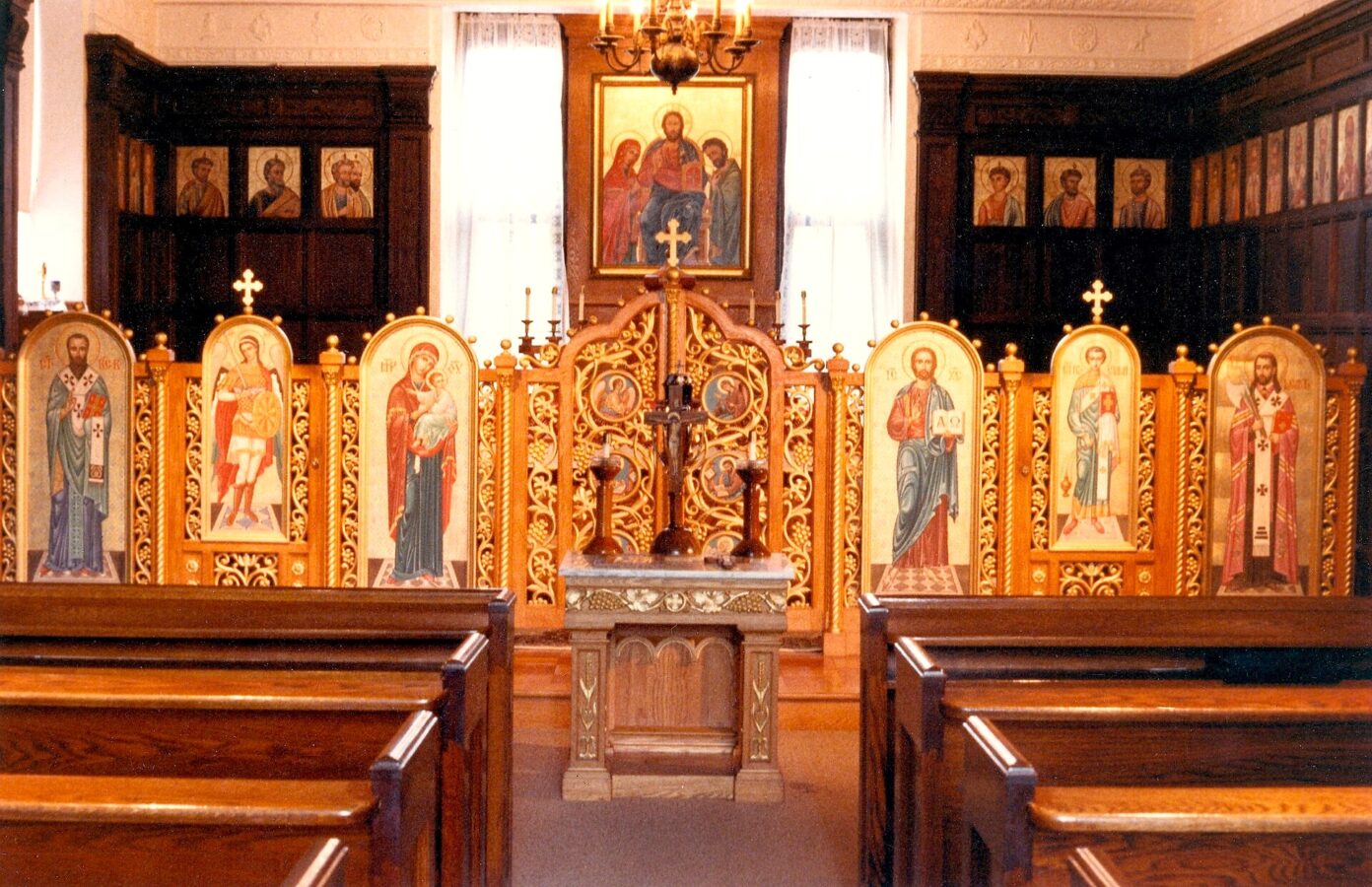
The Basilians kept the estate largely intact. When it was listed on the National Register of Historic Places in 1979, the former library served as a chapel, the upper floors housed the novitiate, and the estate buildings, gatehouses and gardens survived. The monastery remains in use. Its scheduled services are open to the public, and other visits are by appointment.
Photographs
"Ormston," John Edward Aldred house, East Beach Drive, Glen Cove, New York. Fountain (LCCN2008680046) 
"Ormstom," John Edward Aldred house, 1 East Beach Drive, Glen Cove, New York (hand-colored lantern slide) 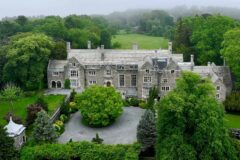
OrmstonHouseAerial.jpg 
Iconostasis Basilian Fathers Glen Cove pict from 1989.jpg 
Ormston House - John E. Aldred Mansion, Long Island, New York
Sources
- National Park Service, via National Archives: National Register of Historic Places Inventory, Nomination Form: John E. Aldred Estate (Ormston, St. Josephat's Monastery), 1979
- National Archives: New York SP Aldred, John E., Estate (catalog record for the nomination)
- National Park Service NPGallery: Aldred, John E., Estate (NRIS 79001594)
- National Park Service (Frederick Law Olmsted National Historic Site): Ormston
- St. Josaphat's Monastery: St. Josaphat's Monastery
- GCatholic.org: Monastery of St. Josaphat (Ukrainian)
- Wikipedia: John E. Aldred Estate
- Wikipedia: Lattingtown, New York
- Utata (photography project page, cite as a blog): St. Josaphat's Monastery Door Handle
Last updated October 18, 2026. Something wrong or missing? Tell us.